

Introduction: The Allure of Lapis Lazuli
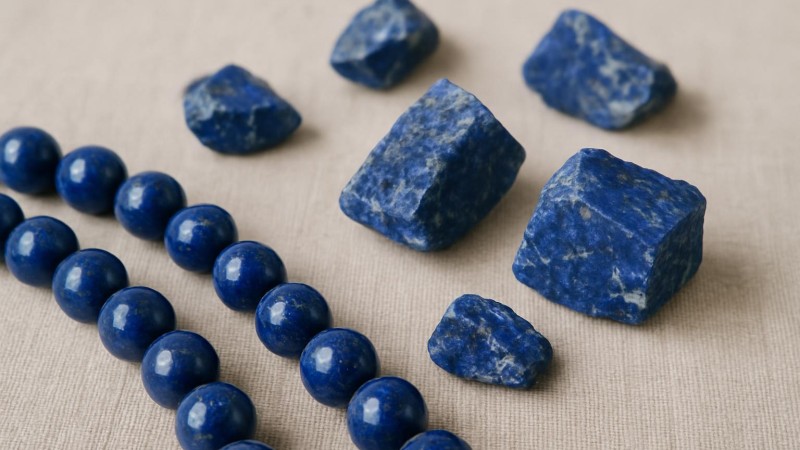
Lapis Lazuli, with its mesmerizing deep blue hue speckled with golden pyrite, has captivated human imagination for thousands of years. Known as the "Stone of Heaven," it has long been associated with royalty, spirituality, and artistic inspiration. From the tombs of Egyptian pharaohs to Renaissance paintings, this gemstone has journeyed through civilizations as a symbol of wisdom, power, and divine connection.
In this article, we’ll explore the fascinating history of Lapis Lazuli, its origins, traditional meanings, and how you can incorporate it into your jewelry creations with materials like amethyst beads and jump rings.
The Origin of Lapis Lazuli
Geological Formation
Lapis Lazuli is not a single mineral but a metamorphic rock composed mainly of lazurite, along with calcite, sodalite, and pyrite. The presence of pyrite gives it that distinctive gold-flecked appearance, while calcite contributes subtle white streaks. This combination creates a celestial appearance that has enchanted jewelers and artisans for millennia.
Where It Comes From
The most famous and historically significant source of Lapis Lazuli is the Sar-e-Sang mines in Afghanistan’s Badakhshan region. These mines have been operating for over 6,000 years, making them among the oldest known gemstone sources in the world. Ancient trade routes carried the stone from Central Asia to Mesopotamia, Egypt, Greece, and Rome. Today, deposits are also found in Chile, Russia, and Pakistan, though Afghan Lapis remains the most prized for its rich ultramarine color.
Lapis Lazuli in Ancient Egypt
The Stone of Pharaohs
Few gemstones have been as revered in ancient Egypt as Lapis Lazuli. It adorned the jewelry of pharaohs and high priests, was ground into pigment for sacred art, and was even placed among burial treasures to accompany souls into the afterlife. The deep blue color symbolized the heavens, eternity, and divine wisdom.
Notably, the funeral mask of Tutankhamun features inlays of Lapis Lazuli, representing protection and divine guidance. Egyptians associated the stone with the goddess Isis, who was said to endow it with mystical qualities.
Symbolism in Egyptian Culture
In Egyptian belief, blue represented truth, creation, and rebirth. Lapis Lazuli was carved into scarabs, amulets, and eye ornaments, thought to grant spiritual insight and safeguard the wearer from evil. The stone’s celestial color mirrored the night sky, making it a powerful symbol of cosmic harmony.
Lapis Lazuli Through the Ages
In Mesopotamia and Greece
In Mesopotamian civilization, Lapis Lazuli was treasured as a royal gem. Ancient Sumerians believed the stone contained the essence of their gods. In Greek and Roman times, it was ground into powder and used as a cosmetic pigment and a decorative inlay in mosaics and jewelry.
Medieval and Renaissance Europe
During the Middle Ages and Renaissance, Lapis Lazuli found new life in art. It was ground into a fine powder to create ultramarine pigment — the most expensive and vivid blue available to artists. This pigment was used by painters like Vermeer and Michelangelo to depict the robes of the Virgin Mary, symbolizing purity and divinity.
Traditional Meanings and Symbolism
A Stone of Wisdom and Truth
Throughout history, Lapis Lazuli has been traditionally believed to represent wisdom, truth, and enlightenment. Ancient cultures regarded it as a stone that opened the mind and encouraged honest communication. In folklore, it was often worn by scholars and philosophers to inspire clarity of thought.
Spiritual and Metaphysical Associations
In metaphysical traditions, Lapis Lazuli is associated with the third eye and throat chakras, symbolizing intuition and expression. It was historically believed to help one access inner truth and enhance spiritual awareness. Ancient healers used it as a tool for meditation and introspection, though such uses were symbolic rather than medical.
Folklore and Protection
In many cultures, Lapis Lazuli was thought to ward off negative energies and bring harmony to relationships. It was often set in talismans or carried as an amulet for protection. While these beliefs belong to folklore, they reflect the enduring human fascination with the mysterious beauty of this gemstone.
Modern Uses of Lapis Lazuli
Jewelry and Adornment
Lapis Lazuli continues to be a favorite among artisans and jewelry designers. Its vivid blue color pairs beautifully with gold, silver, and brass settings. It’s used in necklaces, earrings, bracelets, and pendants, often combined with complementary materials like freshwater pearls or wire wrappers to create unique textures and contrasts.
For a timeless look, pair polished Lapis Lazuli beads with delicate gold findings. For a more contemporary aesthetic, mix it with matte black stones or minimalist silver accents. The stone’s versatility makes it suitable for both statement pieces and subtle everyday adornments.
Decorative and Artistic Applications
Beyond jewelry, Lapis Lazuli is used in carvings, mosaics, and ornamental objects. Its rich color and fine grain make it ideal for intricate inlay work. Historically, it adorned palaces and temples — and even today, artisans use it to create decorative boxes, sculptures, and luxury home décor items.
Collecting and Caring for Lapis Lazuli
As a relatively soft stone (5–6 on the Mohs scale), Lapis Lazuli requires gentle handling. Avoid harsh chemicals or ultrasonic cleaners, as these can damage the surface. Instead, clean it with a soft, damp cloth and store it separately from harder gemstones to prevent scratching.
When designing jewelry, use protective settings or combine it with softer materials to minimize wear. Simple bezel settings or inlay designs work well to safeguard the stone while highlighting its natural beauty.
Tips for Jewelry Makers and Collectors
- Combine colors thoughtfully: Lapis Lazuli’s blue contrasts beautifully with warm metals and golden accents.
- Experiment with shapes: Try pairing round beads with faceted or irregular cuts for visual interest.
- Mix with other stones: Complement its deep blue with lighter stones like amethyst beads or white quartz for balance.
- Mind the weight: Lapis beads can be heavier; use them strategically in designs to ensure comfort.
- Preserve the polish: Avoid exposure to perfumes, lotions, or excessive moisture to maintain the stone’s luster.
Interesting Facts About Lapis Lazuli
- The name “Lapis Lazuli” comes from Latin and Persian roots, meaning “stone of the sky.”
- Ultramarine pigment made from Lapis was once more valuable than gold.
- In ancient Egypt, powdered Lapis was used as eye shadow by nobility — a symbol of status and spirituality.
- Many Renaissance paintings owe their brilliant blues to ground Lapis pigment.
- In ancient mythology, it was said to be a gift from the gods, granting insight and protection.
Lapis Lazuli in Modern Spiritual Practice
Today, many people continue to value Lapis Lazuli for its symbolic associations. In meditation and mindfulness practices, it is traditionally believed to promote calm reflection and deepen self-awareness. While these interpretations are spiritual rather than scientific, they highlight humanity’s enduring relationship with the natural world and its beauty.
Why Lapis Lazuli Remains Timeless
Lapis Lazuli’s appeal transcends time and culture. Whether worn as a statement necklace, set in a delicate ring, or displayed as a decorative object, it evokes a sense of history and mystery. Its celestial color connects us to the ancient skies that inspired early civilizations and continues to inspire creativity today.
At PebbleBead, creators and collectors alike can find inspiration in this royal stone’s story — a gemstone that unites the earth and the heavens in a single shimmering surface.
Conclusion: The Eternal Beauty of Lapis Lazuli
From the ancient tombs of Egypt to contemporary jewelry studios, Lapis Lazuli remains a timeless emblem of elegance and insight. Its history is a testament to humanity’s fascination with beauty and meaning — a connection that continues to shine bright across the ages.

Leave a Comment